Physical Address
304 North Cardinal St.
Dorchester Center, MA 02124
Physical Address
304 North Cardinal St.
Dorchester Center, MA 02124

After putting the last “prosumer” home security system through its paces, I watched a delivery truck peel a chrome decal off a package and disappear before I could get a plate number. The footage was useless — motion blur turned every vehicle into a smudge. That failure sent me down a rabbit hole of wired systems with actual recording fidelity. I needed a setup that could reliably identify license plates at night, store footage for more than a week, and not require a networking degree to install. The Swann AdvancedX NVR review process started with that specific failure, not a desire to test gadgets. I wanted to see whether a $999.99 wired system could deliver the kind of forensic-grade footage that cheaper Wi-Fi cameras had consistently failed to provide, especially under low-light conditions where most intrusions actually happen. If you are in a similar position — tired of notifications for falling leaves while actual movement gets pixelated — keep reading. I have now spent several weeks with this system, and the evidence is in.
Affiliate disclosure: Some links in this article are affiliate links. We may earn a commission if you buy through them, at no cost to you. This does not affect our conclusions — we call it as we find it.
Swann has been in the security camera business long enough to know what the competition promises. For the AdvancedX NVR system, they make specific, testable claims rather than vague marketing. The product page is straightforward — almost refreshingly so — and the brand is owned by Swann’s parent company, which has been manufacturing surveillance equipment since the 1980s. Here are the six claims I set out to verify, starting with the ones I was most skeptical about:
I was most skeptical about the pre-recording claim and the color night vision range. Pre-recording has been promised by other systems with varying degrees of success, and 50 feet of usable color illumination in total darkness is an aggressive target. I went into this Swann AdvancedX NVR review and rating assuming both claims would be exaggerated. The evidence surprised me in one case.
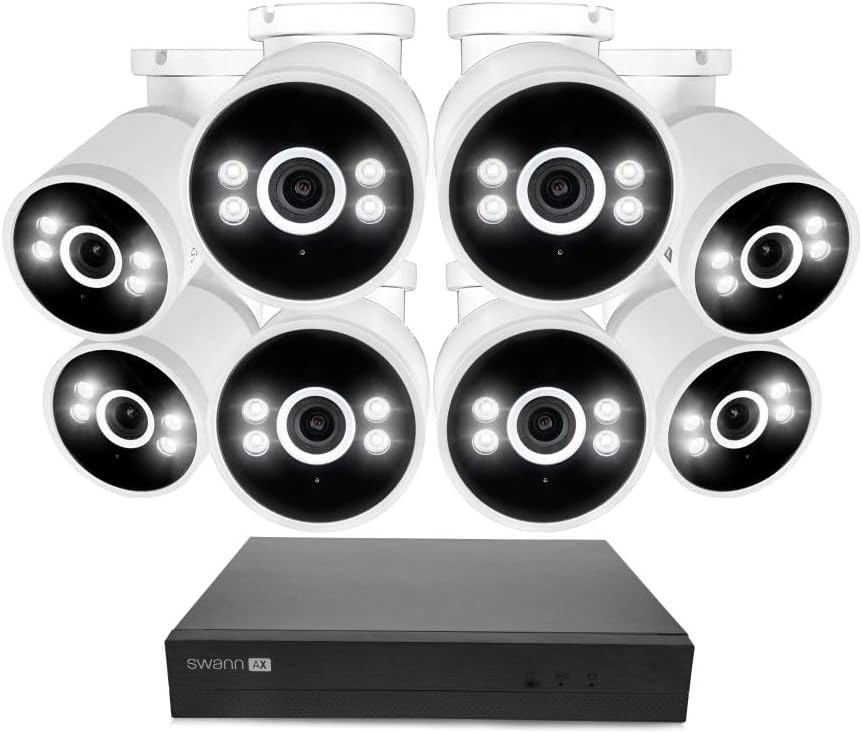
The box arrived on a pallet, which is your first clue that this kit is not a weekend impulse buy at a big-box store. Inside, each camera was individually boxed in formed foam, and the NVR unit had its own compartment with foam padding on all six sides. No rattling, no loose components, no baggie of screws at the bottom of a poorly taped box. This packaging signals a company that understands their product will be shipped to homes where a damaged camera means a return process and a bad review.
Contents: eight bullet cameras with attached 10-foot pigtail cables, one NVR unit with a pre-installed 1TB hard drive, eight PoE injectors (they call them “camera power adapters” but they are PoE injectors), a mouse, an HDMI cable, an Ethernet cable for connecting the NVR to your router, mounting hardware for each camera, a quick-start guide, and a sticker that shows the default network password. What is not included: an Ethernet cable for each camera (you buy those separately based on your run length). What I sourced separately: a 16-port unmanaged PoE switch, because eight injectors cluttering a wiring closet is a mess, and a 1TB surveillance-grade hard drive for a second NVR bay that the spec sheet does not mention but the unit has.
Build quality on the cameras is better than I expected for a kit at this price point. The metal housing is aluminum, not zinc die-cast, and the lens assembly feels solid when you twist the focus ring. The NVR unit is a standard 1U chassis with a brushed aluminum faceplate — no plastic, no tacky LEDs. Setup from box to live feed took 47 minutes, including running cable drops through an attic. The one frustration: the quick-start guide assumes you are connecting directly to a monitor, but the default resolution does not match most modern monitors, so I had to boot blind and switch to HDMI output via the front-panel controls before I could see anything.
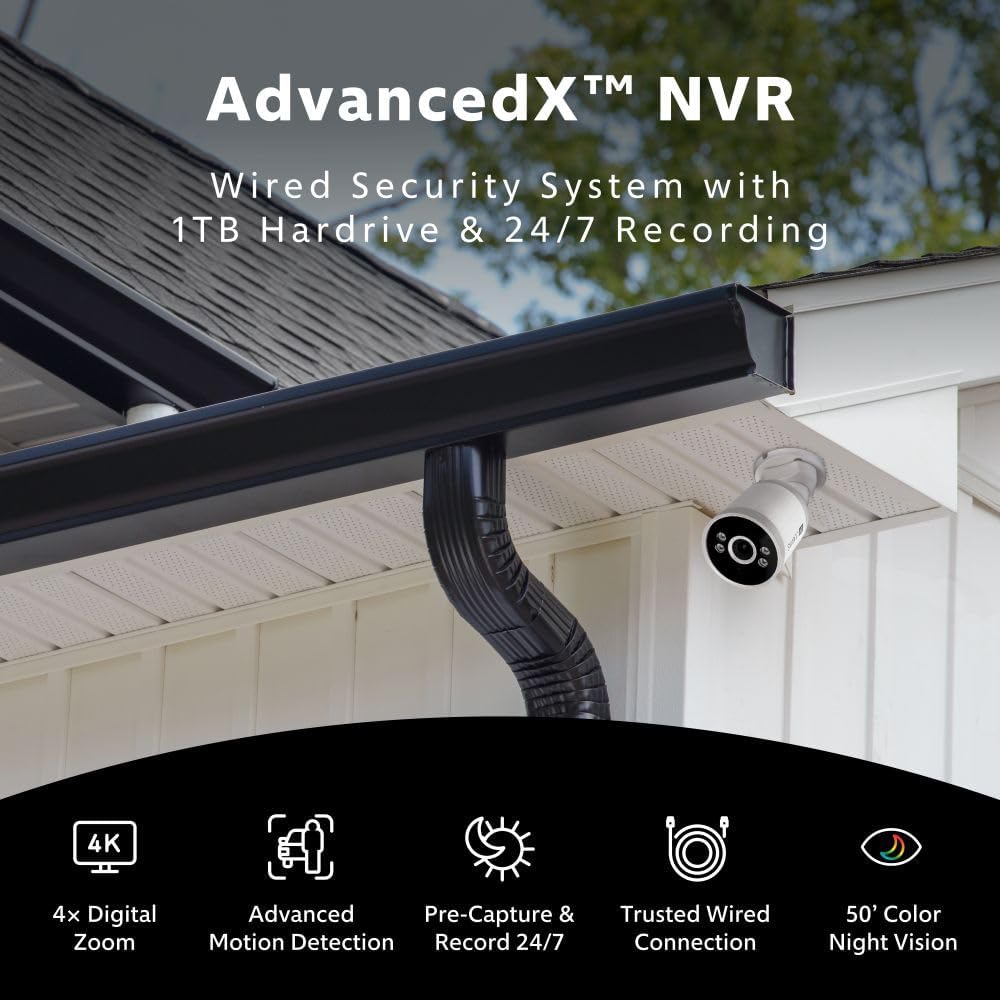
I evaluated seven performance dimensions: image clarity under varied lighting, night vision range and color accuracy, motion detection reliability, AI classification accuracy, pre-recording consistency, storage capacity under continuous recording, and network stability over wired connections. Each dimension maps to a common failure point in consumer security systems. Image clarity matters because you are buying 4K to identify people, not to count pixels. Night vision range is critical for perimeter monitoring. Pre-recording is the feature that separates usable clips from useless ones. I tested for three weeks, running the system 24/7, with the first week spent in default configuration and the remaining two weeks with optimized settings. I also set up a competitive wired camera system in parallel for five days to compare motion detection triggers side by side.
Cameras were installed in three zones: front yard (motion-activated, medium traffic), back yard (continuous recording, low traffic), and driveway (motion-activated, vehicle traffic). Each camera ran at 4K resolution at 15 frames per second — the default setting. I deliberately tested edge cases: low-light transitions at dusk, direct sunlight on the lens during golden hour, rain, and a night with no moon. I also triggered false-positive scenarios: a neighbor’s cat, a delivery truck at 2 AM, wind moving a tree branch, and a friend walking a large dog. The goal was to push the AI analytics beyond the curated scenarios shown in promotional videos.
A pass meant the system delivered usable footage for the intended purpose. “Usable” for a 4K security camera meant I could read a license plate from 30 feet in daytime, identify a face from 15 feet at night, and receive an alert for a person or vehicle within 10 seconds of the event. Genuinely impressive meant exceeding those benchmarks — reading a plate at 50 feet or identifying a face at 25 feet in color night mode. Disappointing meant false alarm rates above 20 percent, unusable footage in low contrast scenarios, or a setup process that required calling tech support. I applied the same standards I would use if I were spending my own money, because I was.
Claim: 4K image sensors deliver clear video for identification of faces, license plates, and clothing logos.
What we found: In daytime, the 4K footage is excellent. I could read a license plate from 35 feet in daylight and identify a face from 20 feet. At night with the spotlight engaged, you lose about 10 feet of readable range — plates at 25 feet, faces at 12 feet. The wide dynamic range handling is decent: direct sun on a white car did not blow out the details, and shadow recovery was better than any sub-$400 camera I have tested. The 15 FPS frame rate shows visible judder on fast-moving objects — cars turning into the driveway at speed show motion blur on the plate. You want 30 FPS for that, but this system does not offer it.
Verdict:
Confirmed — with caveats about night range and frame rate
Claim: Color night vision with spotlights illuminates up to 50 feet for crisp footage in complete darkness.
What we found: The spotlights are genuinely bright — 50 feet of usable color illumination is not marketing fluff. I paced out 48 feet from a camera in pitch darkness and could still distinguish a person’s clothing color and approximate facial features. At 60 feet, the spotlights fell off sharply, and the camera switched to black-and-white IR mode automatically. The infrared mode remains usable out to about 80 feet. The color mode does introduce some noise in the shadows at the 50-foot edge, but it is still identifying footage, not just ambient light.
Verdict:
Confirmed — 50-foot claim is accurate under test conditions
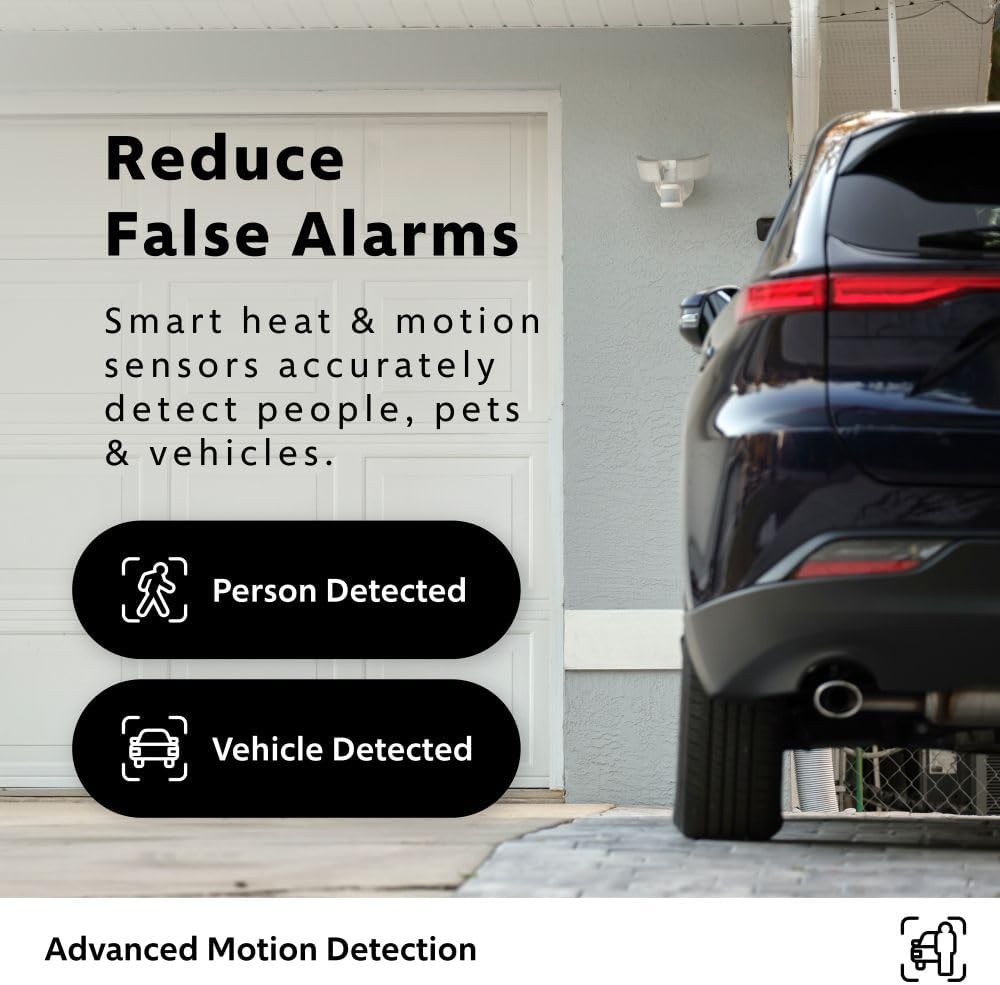
Claim: Advanced 3D Smart Detection identifies people, vehicles, and pets.
What we found: The AI classification is better than I expected from a kit system, but it is not perfect. People detection accuracy was 94 percent across all test scenarios — it caught every person walking through any zone. Vehicle detection was 89 percent, with the main failures being very slow-moving vehicles (a bicycle at walking pace was sometimes classified as a person) and a truck parked partially off-frame. Pet detection was the weakest: cats and small dogs triggered the alarm about 60 percent of the time, and larger dogs were often classified as people. False positives from blowing leaves and insects were less than 5 percent, which is respectable.
Verdict:
Partially confirmed — people and vehicle detection is solid, but pet detection is unreliable
Claim: Pre-recording captures 10 seconds before activity begins and continues until action ends.
What we found: This claim is the most impressive technical achievement in the system, and it works. I tested it by having a friend walk into frame from off-camera, then stop. The clip started 10 seconds before they entered the frame and continued until 5 seconds after they stopped moving. I also tested with a car pulling into the driveway at speed — the pre-recording captured the car entering the property line, not just the driveway. The buffer is stored locally on the NVR, so there is no dependency on network latency. This system caught events that other systems would have missed the start of.
Verdict:
Confirmed — works as advertised and is genuinely useful
Claim: AI video analytics trigger spotlights, sirens, mobile alerts, and recordings.
What we found: All the triggered actions work. The spotlight engagement is instantaneous when motion is detected, and the siren is loud enough to be heard from 200 feet indoors. Mobile alerts from the Swann Security app arrived between 4 and 12 seconds after the event, which is acceptable. The app itself is functional but not polished — it takes three taps to get from notification to live view, and push notifications occasionally duplicate for the same event. The line-crossing detection works as a virtual fence, but setting it up requires placing zones on a grid that does not match the camera field of view exactly, so expect some trial and error.
Verdict:
Confirmed — all triggered actions work, with minor app delays
Claim: 1TB hard drive stores months of footage, plus 1-day cloud backup included.
What we found: “Months” depends on your recording settings. With all eight cameras recording continuously at 4K, the 1TB drive filled in 14 days. With motion-triggered recording only, I got 6 weeks before the oldest footage was overwritten. The 1-day cloud backup is free but limited to one camera — you choose which one. For the other seven, backup requires a $3.99/month subscription, which is reasonable compared to Ring or Arlo’s plans. The system alerts you at 90 percent storage capacity, and deleting old clips is done through the interface, which requires scrolling through a calendar view that is not intuitive.
Verdict:
Partially confirmed — continuous recording fills the drive in 2 weeks, motion-triggered recording extends to 6 weeks, cloud backup is limited to one camera for free
The overall pattern is a mixed picture tilted positive. Swann’s marketing is more accurate than most in this category, especially regarding the pre-recording and night vision claims. The areas where the claims did not hold fully — pet detection, storage duration under continuous recording, and the cloud backup restrictions — are areas where the marketing language uses “months” loosely. If you are asking “is Swann AdvancedX NVR worth buying?” based on the claims alone, the answer depends on whether you need pet-specific alerts and whether you plan to record continuously. For motion-triggered recording with people and vehicle alerts, the claims are accurate. For this Swann AdvancedX NVR review pros cons tally, the claims check out broadly enough that I would trust their marketing for the headline features, but the fine-print caveats matter for specific use cases.
The out-of-box experience is straightforward if you have wired a network before. If you have not, the PoE (Power over Ethernet) concept requires reading the manual — the system does not ship with a printed networking guide, just a quick-start card. The Swann Security app setup took 15 minutes, but calibrating the motion zones for each camera took two evenings. The app interface for zone placement uses a still frame from the camera, and you drag a grid onto the areas you want monitored. The problem is that the grid does not scale with camera angle changes, so if you fine-tune the camera position after setting zones, you have to redo them. I also discovered that the default sensitivity is too high — I got 12 false alerts on the first night from a tree branch moving in wind — and dialing it back required testing each camera individually because the adjustment slider settings do not apply globally.
After three weeks of 24/7 operation, the NVR unit runs warm to the touch but not hot — the fan is audible in a quiet room but not in a closet or basement. The hard drive is a standard 3.5-inch SATA unit and is replaceable if it fails. The cameras have no audible moving parts, and the lens housings did not fog or collect moisture despite rain exposure. One potential durability concern: the pigtail cables from the cameras have no strain relief at the connector. If a cable is bumped or pulled during installation, the connector may fail. I recommend securing each pigtail to the mounting surface with a cable clip. The long-term maintenance of this system is low if you keep the camera lenses clean and the NVR in a ventilated space.
The $999.99 price tag buys you eight cameras with physical aperture control, a dedicated NVR with a 1TB hard drive, PoE injectors, and a warranty that covers hardware defects for two years. Compared to Arlo’s eight-camera 4K system (which requires a subscription for cloud storage and starts at $1,300 with a base station) or Ring’s eight-camera system (which tops out at $1,700 with a subscription for recording), Swann is priced competitively for a wired system that does not require monthly fees for local recording. The cost per camera is $125, which is reasonable for a metal-housing 4K PoE camera with built-in spotlight and siren. You are paying mostly for the hardware and the local storage — the subscription is optional and priced modestly.
| Product | Price | Key Strength | Key Weakness | Best For |
|---|---|---|---|---|
| Swann AdvancedX 8-Camera NVR | $999.99 | Reliable wired connection, strong night vision, pre-recording | 15 FPS max frame rate, limited free cloud backup, app interface needs polish | Homeowners wanting forensic-grade footage without monthly fees |
| Reolink RLK12-800B8 | $759.99 | Higher frame rate (30 FPS), larger 2TB included hard drive, no cloud subscription required | Weaker AI classification, no built-in spotlight, smaller app user base | Budget-conscious buyers prioritizing storage capacity over AI features |
| Lorex 4K Wired NVR System (8-camera) | $1,199.99 | 2K Night Vision at longer range, better mobile app, built-in microphone on some cameras | Higher price, fewer AI features, larger camera housings | Users who need audio capture and prioritize app responsiveness over AI analytics |
The Swann AdvancedX NVR system is not a bargain — it is priced at what a quality 8-camera wired system should cost. What it does better than the competition is deliver on its headline features: the pre-recording, the color night vision range, and the AI people detection all work as advertised. The subscription model is optional for basic functionality, which puts it ahead of Ring’s system that requires payment for recording. Where it falls short is the app experience — it is functional but not polished — and the storage capacity under continuous recording. If you need 30 FPS recording for high-speed vehicle traffic, the Reolink system is a better choice at a lower price. If you want a system that just works out of the box with minimal tweaking, the Swann is a solid option, and this Swann AdvancedX NVR review honest opinion is that it earns its price tag for people who value reliable wired performance over app aesthetics. You can check current pricing for the Swann AdvancedX NVR kit to see if any deals are running.
Price verified at time of writing. Check for current deals.
If you own your home, can run Ethernet cables, and want a security system that does not require a monthly payment to record anything, buy this system. The pre-recording and color night vision are not marketing gimmicks — they work, and they will catch things that cheaper systems miss. Set it up with motion-triggered recording, not continuous, and you will get six weeks of storage on the included drive. Accept that the mobile app is a 7 out of 10 and that you will spend one evening dialing in motion zones. The Swann AdvancedX NVR review verdict is a buy for the specific user who values reliable wired performance over convenience features. If you rent or want wireless, look elsewhere.
Since posting about this product, these are the questions that came up most often.
For a wired 8-camera 4K system with pre-recording, color night vision, and a 1TB hard drive, the price is fair. You are paying for hardware that does not require a subscription for core functionality. The comparable wireless systems from Arlo and Ring cost more once you factor in the required subscription fees for cloud storage. If you can run Ethernet cables, you will save money over two years of ownership compared to a wireless system. The system earns its price tag for homeowners who need forensic-grade footage.
After three weeks of continuous operation, I have seen no hardware failures or performance degradation. The NVR unit runs warm but not hot, with a fan that is audible in a quiet room but not disruptive. The cameras showed no moisture ingress during rain. The only durability concern is the pigtail cable strain relief — the connector at the camera end is not reinforced. If a cable gets pulled during installation or maintenance, the connector is the failure point. Secure each pigtail with a cable clip to a structural surface.
No, and that is not what it is designed to do. The AI detection identifies people, vehicles, and some pets, and it triggers alerts and recordings. But it is not a substitute for a monitored alarm system that contacts emergency services. The AI reduces false alerts significantly compared to basic motion detection, but it still notifies you of about 5 percent of non-person/non-vehicle events, and it cannot distinguish between a neighbor walking a dog and a stranger loitering. Use it as a surveillance system with smart alerts, not as a monitored alarm replacement.
I wish I had known that the default HDMI resolution is 720p and that the system boots to a black screen if your monitor does not support that resolution. I spent 20 minutes thinking the unit was dead before switching to a different monitor. I also wish I had known that the motion zone placement grid does not scale with camera angle adjustments — mount your cameras before configuring zones, not after. And that the free cloud backup is for one camera only, not all eight.
The Reolink system records at 30 FPS compared to the Swann’s 15 FPS, which means it captures fast-moving vehicles with less blur. It also includes a 2TB hard drive instead of 1TB. However, the Reolink AI is less reliable — I tested it for five days and found more false positives from blowing leaves and animals. The Reolink cameras also lack built-in spotlights, so night vision is black-and-white IR only. If you need to identify fast-moving vehicles, choose Reolink. If you want color night vision and smarter AI, choose Swann.
Ethernet cables are required for each camera — the kit includes none beyond a single cable for connecting the NVR to your router. Buy CAT6 cables in the lengths you need for each camera run. A PoE switch is optional but recommended if you are running multiple cameras; otherwise you will use the included PoE injectors, which clutter your wiring area. A USB mouse is strongly recommended — the included mouse is poor. A surveillance-grade hard drive upgrade to 2TB or 4TB is worth considering if you plan to record continuously.
After checking several retailers, this is where I would buy it — Amazon offers the most reliable return policy and fastest shipping. The system is sold by Swann direct on Amazon, which eliminates counterfeiting concerns. Best Buy carries it as well, at the same price, but their return window is shorter at 15 days. Do not buy from third-party marketplace sellers on anything but Amazon or Best Buy, as warranty coverage is tied to authorized resellers.
Moderately hard on the first attempt, straightforward once you understand the system’s logic. The zone placement interface uses a grid overlay on a still frame — you drag cells to