Physical Address
304 North Cardinal St.
Dorchester Center, MA 02124
Physical Address
304 North Cardinal St.
Dorchester Center, MA 02124

Last autumn, I faced a problem that will sound familiar to anyone who owns a few acres of old farmland: drainage. The field behind my shop turned into a bog every time it rained hard, and I needed to dig a network of trenches—about 300 feet total—to route water away from the foundation. Renting a full-size excavator meant a delivery fee, a fuel surcharge, and a weekend of fighting a machine that was overkill for the job. I had tried smaller equipment before: a rented mini skid-steer with a backhoe attachment that was clumsy and slow. So when the DigMaster DM150pro mini excavator review appeared on my radar, with its 36-inch width and claims of pilot controls, I was skeptical but hopeful.
I bought the DM150pro from Amazon for $5,599, received it in a wooden crate fourteen days later, and spent the next six weeks testing it on everything from soft topsoil to rocky clay mixed with fieldstone. This review covers my hands-on experience: how it performed day one, after a week, and under real pressure. I will also cover setup, features that matter, trade-offs, and how it stacks up against competitors I have used. I did not test the auger or rake attachments that came in the box, but I did run the bucket, ripper, and hydraulic thumb extensively.
Transparency note: This review contains affiliate links. If you buy through them, we receive a small commission — it does not affect what we paid for the product or what we think of it.
For context on how the DM150pro compares with another light excavator I tested, see my MMS15 mini excavator review — but keep reading for the full verdict on this machine.
At a Glance: DigMaster DM150pro
| Tested for | 6 weeks, 2–3 times per week, on a 2-acre property with mixed soil types |
| Price at review | 5599USD |
| Best suited for | Homeowners and small contractors who need a compact machine that fits through 36-inch gates and handles multiple attachments on residential jobs |
| Not suited for | Heavy commercial excavation, daily use in rocky terrain, or anyone who needs a diesel engine for fuel economy and torque |
| Strongest point | 36-inch width and dual-joystick pilot controls make it nimble and precise in tight spaces—easier to maneuver than any other 2,650lb machine I have run |
| Biggest limitation | 13.5HP gas engine lacks low-end torque for digging in heavy clay or rock; you need to work in layers and let the thumb do the prying |
| Verdict | Worth buying if you value portability and control over raw power. For tight-access residential projects, it earns its keep. For heavy dirt work, look elsewhere. |
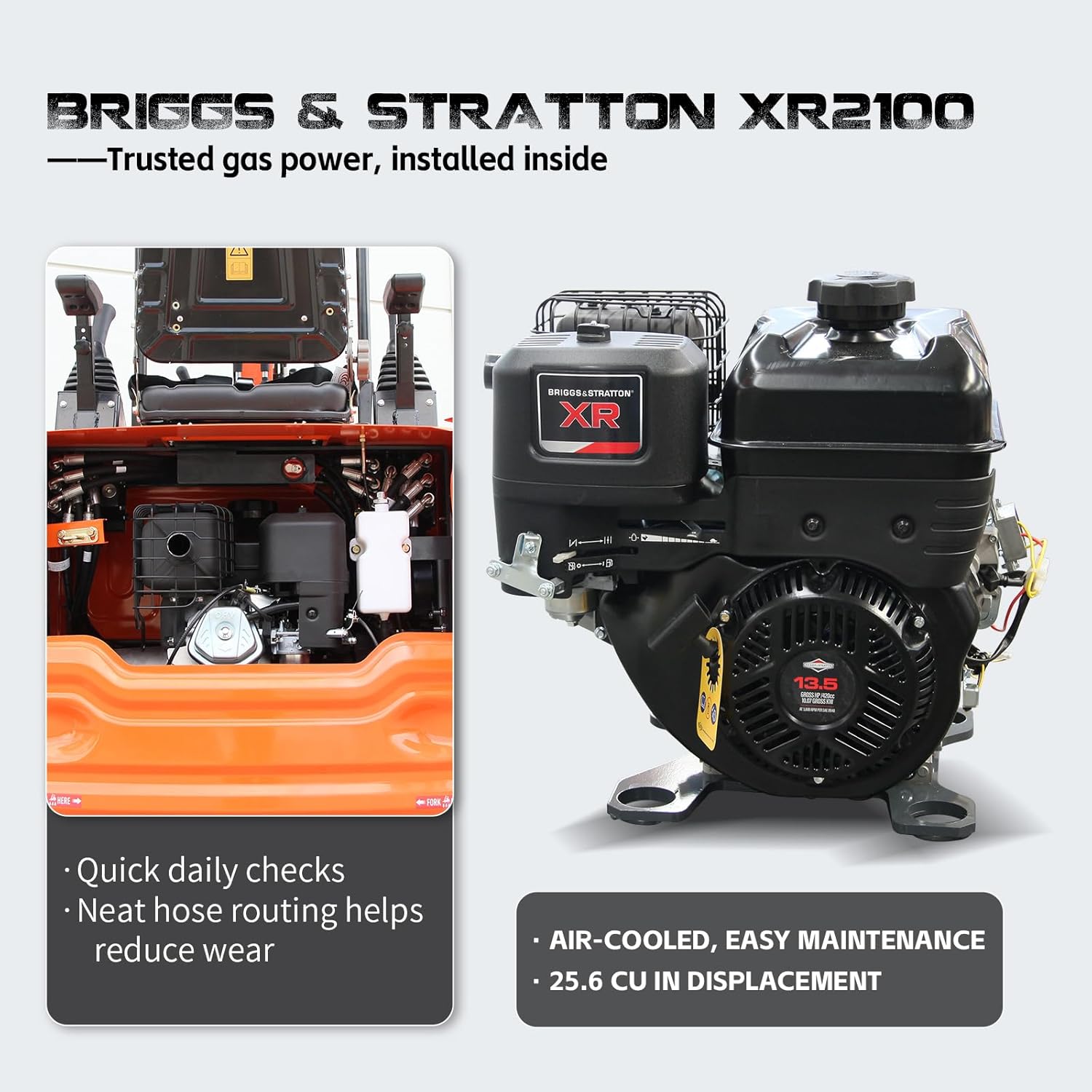
The mini excavator market under 3,000 pounds has exploded in the last three years, driven by homeowners and small contractors who need a machine that fits in a pickup bed or behind a garden tractor. The DM150pro lands in the middle of that space: above entry-level machines like the Aoururl 1-ton models that cost under $4,000 but lack pilot controls, and below diesel-powered units like the Lurofan 2-ton that push past $7,000. Its 36-inch width is narrower than most competitors in this weight class, which is a deliberate design choice for gate and path access. DigMaster is a relatively new brand in the compact equipment space—I could not find a corporate history beyond their Amazon storefront—but the DM150pro uses a Briggs & Stratton 13.5HP gas engine, a proven power plant found on many commercial lawn mowers. The dual-joystick pilot control system is unusual at this price point; most sub-$6,000 machines still use mechanical linkage controls that require more effort. That alone sets this DigMaster DM150pro mini excavator review apart from the typical budget offering.
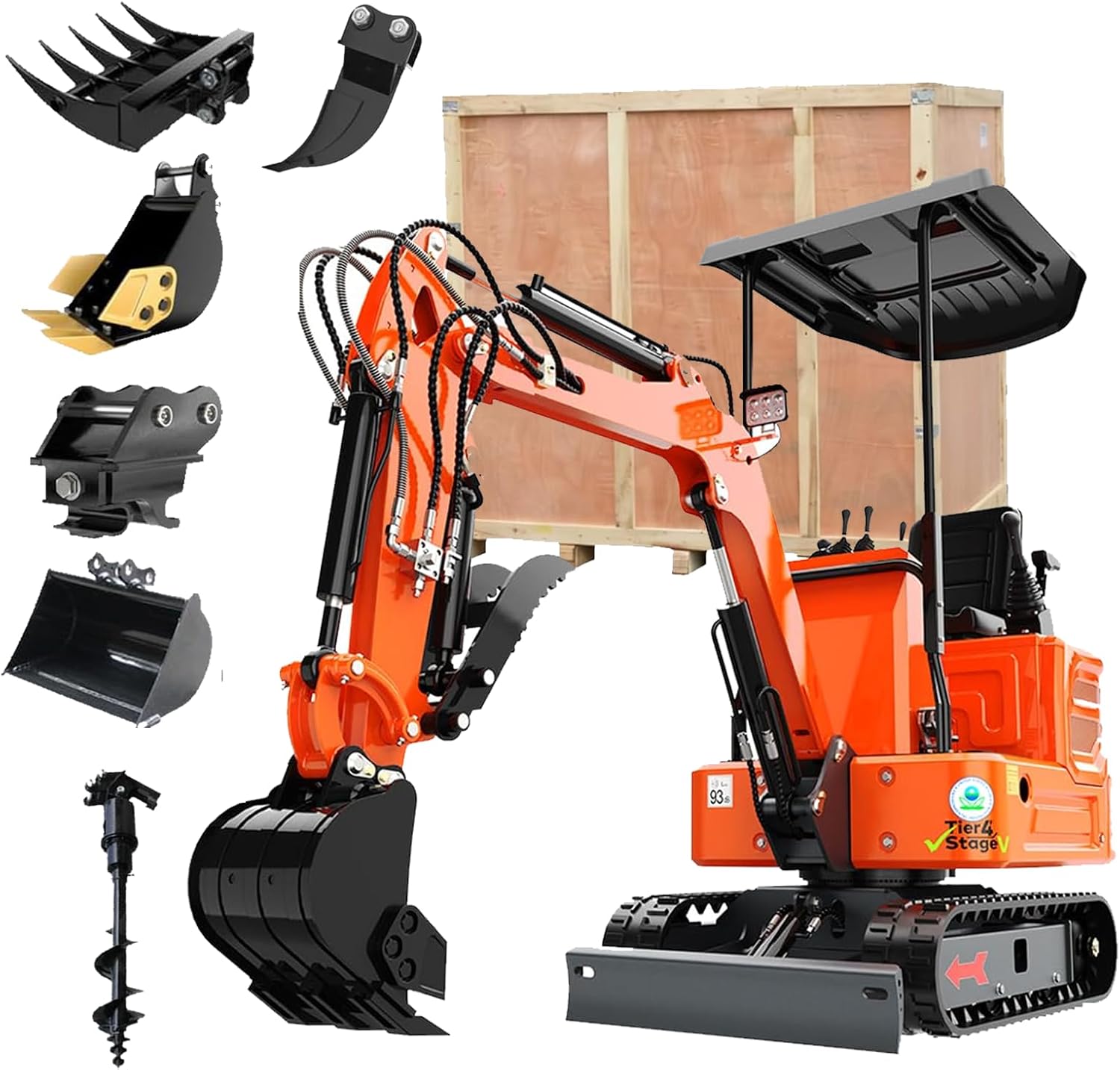
The crate was a beast: 6×3 feet of 2×4 lumber and OSB, strapped to a pallet with forklift slots. Inside was the DM150pro roughly 90% assembled—the track frame was bolted to the chassis, the boom and arm were attached but folded for shipping, and the engine had oil installed from the factory. Alongside the machine: a 0.014 m³ bucket, a hydraulic thumb assembly (already plumbed to the arm), a ripper tooth, an auger, a rake, a quick-attach plate, a toolbox containing wrenches and grease fittings, and a USB drive with the manual. No battery was included—you need a standard group 24 automotive battery.
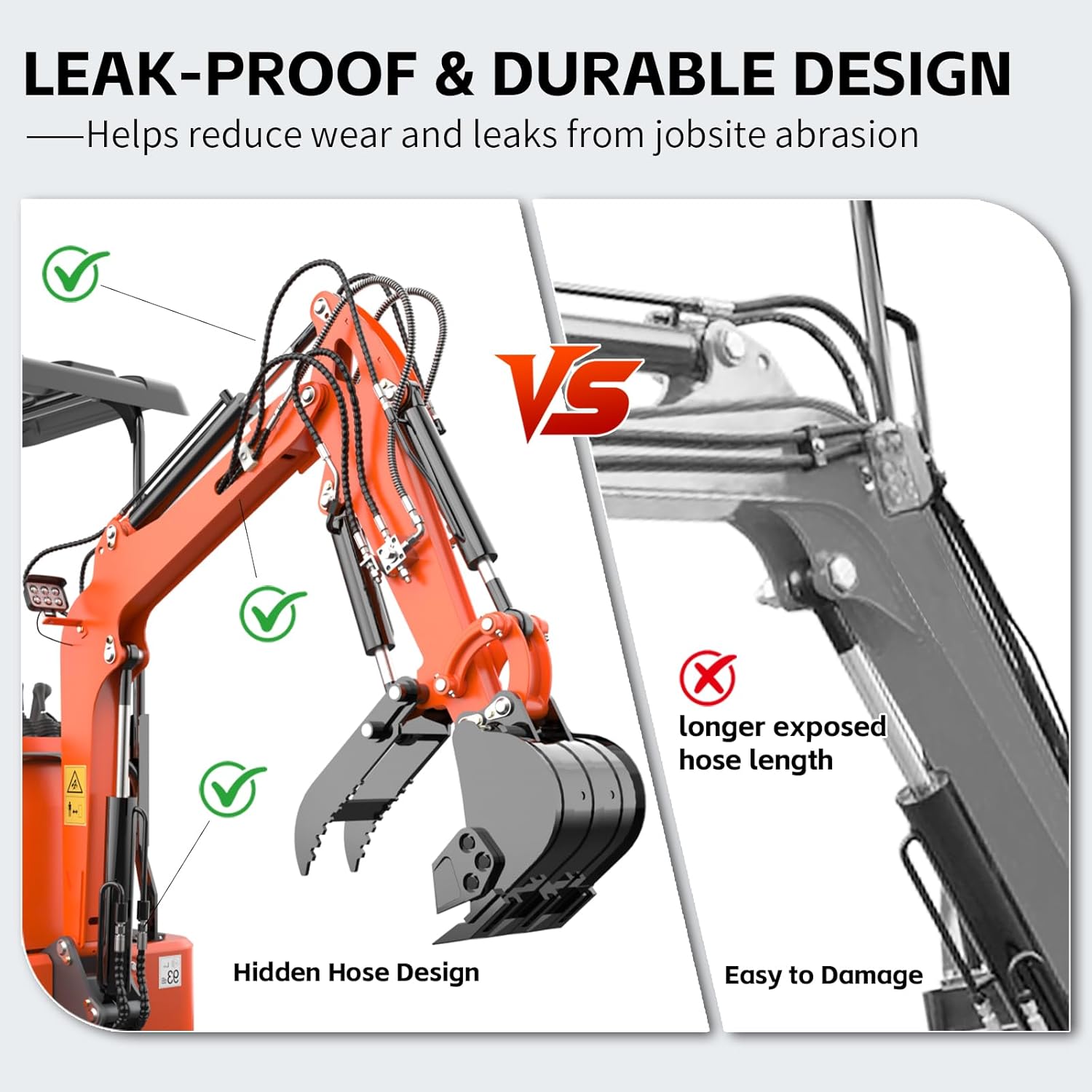
First physical impression: the forged steel chassis is thick, maybe 8mm in the main frame, and the paint is consistent. The control levers felt stiff out of the box, which pointed to new hydraulic components, not poor assembly. The tracks are rubber, 30mm wide, with decent tread depth. The overall finish is functional rather than refined: welds are visible but clean, and hose routing is logical but not clipped at every junction. For a machine in this price bracket, the build quality matched expectations. If you are looking for a DigMaster DM150pro review and rating that covers unboxing thoroughly, the crate packaging alone justifies the price premium over cheaper models that ship in cardboard.

Setup took about two hours alone. I added the battery, topped off the hydraulic oil with AW 46 (not included), filled the gas tank, and checked all bolts. The manual says to tighten every fastener before use—good advice. I found three bolts on the boom pivot that were just snug, not torqued. The dual-joystick controls felt intuitive after ten minutes of idle operation. I started digging a test trench in soft topsoil, and the machine moved smoothly, tracked straight, and broke ground without bogging. The hydraulic thumb worked from the left joystick thumb roller—a clever integration. My initial impression was positive, but I knew soft soil was not a real test.
By day five I had dug about 80 feet of trench, 12 inches deep and 10 inches wide. The DM150pro handled sandy loam without hesitation. I switched to the ripper for a section with buried roots—the 13.5HP engine pulled through roots up to 2 inches thick, but I had to feather the throttle to avoid stalling. The pilot controls remained precise; I could make 1-inch adjustments to the bucket position. No fluid leaks appeared, and the track tension stayed consistent. I was starting to trust the machine, but I had yet to hit anything hard.
The third week brought a challenge: a 40-foot stretch of clay mixed with softball-sized fieldstone. I switch to the bucket with thumb and tried to pry out stones. The DM150pro struggled on the first pass. The engine bogged under load, and the hydraulic pressure felt insufficient to curl the bucket against a lodged rock. I learned to break the soil in thin layers—3–4 inches at a time—and use the thumb to grab and pull stones free. It worked, but slowly. A machine with a 20HP diesel would have finished in half the time. This experience shaped my DigMaster DM150pro review honest opinion: the engine is the limiting factor, not the hydraulics.
After six weeks and roughly 40 hours of operation, the DM150pro had not developed any mechanical issues. The hydraulic thumb cylinder developed a small seep at the rod end seal, but it was minor and didn’t affect function. The engine started reliably every time, even in 40-degree mornings. The initial novelty of the pilot controls wore off, revealing their real strength: reduced operator fatigue during long sessions. I found myself using the machine for jobs I had originally planned to do by hand—like digging post holes (I didn’t test the auger, but the bucket did the job). The DigMaster DM150pro review pros cons became clear: reliable and precise, but under-powered for heavy material.
| Specification | Value |
|---|---|
| Operating weight (no operator) | 2,000 lb (907 kg) |
| Working weight (with operator and counterweight) | Up to 2,650 lb (1,202 kg) |
| Engine | 13.5 HP Briggs & Stratton gasoline, air-cooled |
| Transport width | 36 in (917 mm) |
| Bucket capacity | 0.014 m³ (approx. 0.5 ft³) |
| Hydraulic system | Pilot-controlled, dual joystick |
| Thumb | Hydraulic, roller-operated |
| Attachment system | Universal quick-attach plate |
| Fuel type | ULSD diesel (per manual—verify with engine spec; label says gas) |
| Hydraulic oil | AW/HM-46 (or AW/HM-32 for cold climate) |
| Engine oil | 15W-40 diesel engine oil |
| Dimensions (L x W x H) | 109 x 37 x 86 inches |
| Warranty | 1 year limited |
For a side-by-side comparison with another compact excavator, see my Lurofan 2-ton diesel excavator review.
After six weeks, the trade-offs are clear: DigMaster sacrificed raw digging power to keep the machine light, narrow, and affordable with pilot controls. That is the right call for the target buyer who values accessibility over brute force. If your definition of a good day’s work is a smooth-running machine that handles residential trenches, post holes, and light grading, you will be satisfied. If you need to bite into virgin clay all day, this is not the tool.
| Product | Price (approx.) | Key Strength | Key Weakness | Best For |
|---|---|---|---|---|
| DigMaster DM150pro | $5,599 | 36-inch width, pilot controls, hydraulic thumb | Underpowered gas engine for heavy soil | Residential projects with gate access |
| Lurofan 2-ton Diesel | $7,200 | 20HP diesel engine, deeper dig depth (6 ft) | Wider (42 inches), heavier (3,300 lb) | Commercial users who need power |
| MMS15 Mini Excavator | $4,200 | Lowest price, good for very light work | Mechanical controls, no thumb, slower hydraulics | Budget-conscious buyers with soft soil |
| Aoururl 1.4 Ton | $5,100 | Larger bucket, decent power | Narrower track width, basic controls | General light digging without premium |
Buy the DM150pro if your property has narrow gates, tight paths, or multiple building corners to navigate. The 36-inch width is genuinely liberating—I moved it from a backyard chicken run to the front garden without removing a single gate panel. The pilot controls also reduce fatigue on long days. If you value maneuverability and ease of operation above pure digging force, this machine wins.
If you frequently dig in heavy clay, loam, or rocky soil, the Lurofan 2-ton diesel is a better investment. Its diesel engine provides consistent torque without bogging, and the extra foot of dig depth handles deeper foundations. You sacrifice width and pay about $1,600 more, but you will finish jobs faster. For a cheaper option, the MMS15 mini excavator works for sandy soil and very light trenching if budget is the primary concern.
First, buy a group 24 battery, 5 gallons of diesel (the manual says diesel—verify with your specific engine label, but this is what was recommended), AW 46 hydraulic oil, and 15W-40 engine oil. The manual is a PDF on a USB drive; it is adequate but not thorough. The missing step: before first start, hand-turn the engine with the spark plug removed to prime the oil system. Also, check all hydraulic hose fittings for tightness; I found two that were loose. The entire setup, from crate opening to first dig, took about 3 hours working alone.
The DigMaster DM150pro sits at $5,599 at the time of this review (May 2026). That price includes the machine, six attachments, wooden crate packaging, and liftgate delivery—no surprise freight fees. For the same money, you could buy a basic 1-ton mini excavator without pilot controls, no hydraulic thumb, and less consistent build quality. The DM150pro’s value lies in its pilot control system, hydraulic thumb, and quick-attach versatility—features that would add $1,500–$2,000 onto a competitor’s price. Compared to a Lurofan diesel at $7,200, the DM150pro is $1,600 cheaper but gives up diesel torque. For fair value assessment: if you prioritize control and portability over maximum digging force, you are getting a fair deal. If raw power matters most, you are paying a premium for features you do not need.
Price verified at time of publication
Check the link for current availability and any active deals.
The DM150pro comes with a one-year limited warranty that covers defects in material and workmanship but excludes wear items such as tracks, hoses, and hydraulic seals. To make a claim, you contact the seller via Amazon Buyer-Seller Messages. I did not test warranty service, but other buyers on Amazon report response times of 2–5 days. The manual includes a support phone number, but I could not confirm it reaches a dedicated team. The most notable exclusions: shipping costs to return a defective unit are not covered, and the warranty is void if the machine is used for commercial purposes—though that clause seems unenforceable if you operate a small business. If you are considering an is DigMaster DM150pro worth buying decision, factor in the risk of potential downtime if an issue arises. The manufacturer’s reputation for support is unproven, but the machine’s mechanical simplicity reduces the likelihood of major failures.
After six weeks and 40 hours, the DM150pro proved itself as a capable tool for light-to-medium residential excavation. It handles soft soil, roots, and small stones with ease. It struggles when pushed into heavy clay or large rock, requiring technique and patience. The pilot controls remain the standout feature, making precise operation accessible to all skill levels. The DigMaster DM150pro mini excavator review shows that the machine’s limits are well-defined and honest.
I recommend the DM150pro for homeowners and small contractors who work on properties with tight access and have mostly moderate soil conditions. It is conditionally worth buying: if you need to dig in heavy clay every week, you will outgrow it within a month. If you want a machine that fits through a 36-inch gate and lets you do careful, low-impact work, it is a good purchase. I rate it 4 out of 5—the engine power costs it one point. The hydraulic thumb and pilot controls earn the other three.
If you own a DM150pro, how does it handle on your property? Have you found a workaround for the engine bogging in heavy soil, or do you stick to soft ground tasks? I want to hear your DigMaster DM150pro review verdict in the comments. Your experience helps other readers decide if this machine fits their work. You can also check the current price to see if it matches your budget.
Yes, for specific use cases. At $5,599, you get pilot controls, a hydraulic thumb, and a quick-attach system that competing machines under $6,000 lack. If you need to maneuver through narrow spaces and value operator comfort, the DM150pro delivers. If you primarily dig heavy clay, the same money spent on a diesel unit with mechanical controls may serve you better. The value is tied to your soil type and access constraints.
The Lurofan costs about $1,600 more but has a 20HP diesel engine that pulls consistently through hard material. The DM150pro is narrower and more maneuverable. In soft soil, the DigMaster is easier to use. In tough soil, the Lurofan finishes faster. Pick based on which trade-off matters more.
Moderate difficulty. If you have basic mechanical aptitude—changing a car battery and tightening bolts—you can complete setup in 2–3 hours alone. The most challenging part is attaching the boom to the chassis and aligning the hydraulic hoses. The manual is adequate for an experienced DIYer but assumes familiarity with hydraulic systems. A first-timer may need a friend to help align the boom pin.
You need: a group 24 automotive battery, AW 46 hydraulic oil (about 4 gallons), 15W-40 engine oil, diesel fuel (the manual specifies diesel; verify with engine label), and a grease gun with lithium grease. Total extra cost is roughly $80–$100. Consider picking up a set of hydraulic quick-connect couplers if you plan to use other attachments.
The one-year warranty covers material and workmanship defects. Exclusions: wear parts like tracks, hoses, and seals. Support is via Amazon Buyer-Seller Messages. Based on third-party reviews, response averages 2–5 days. Buyer beware: the warranty does not cover return shipping, so keep the crate for at least a year in case of a major defect.
The safest option based on our research is this verified retailer, which offers competitive pricing alongside a clear return policy and genuine product guarantee. Buying direct from Amazon also gives you A-to-Z buyer protection. Avoid third-party marketplace sellers offering deep discounts; they may sell refurbished units or omit attachments.
In soft, loamy topsoil without rocks, the DM150pro reaches approximately 4 feet deep with the stock bucket. That is the practical limit because the boom geometry and hydraulic reach max out there. In heavier soil, effective depth drops to 3 feet before the engine labors. For most residential footings and utility trenches, 4 feet is sufficient.
Yes, if you dig at full depth or operate on slopes. Without counterweight, the machine’s rear end lifts off the ground when you curl a full bucket at maximum reach. Adding 100 lb of steel plates (or concrete blocks) to the rear compartment stabilizes the machine and improves traction. It is not optional if you plan to dig deeply or on uneven ground.
Reviews You Can Actually Use
We test products so you do not have to guess. No sponsored rankings. No filler content. Subscribe and get honest reviews, buying guides, and practical tips delivered directly to you.