Physical Address
304 North Cardinal St.
Dorchester Center, MA 02124
Physical Address
304 North Cardinal St.
Dorchester Center, MA 02124

Variable frequency drives are not new technology, but the market for affordable single-phase-to-three-phase converters has grown rapidly as more home shop owners acquire industrial machinery. A VFD does more than just change voltage and phase count. It gives you control over motor speed, acceleration, and torque in ways a simple rotary converter never can.
This TDIOZABKX unit sits in a curious middle ground. It is priced well below industrial brands like ABB or Allen-Bradley, but significantly above the cheapest no-name drives on Amazon. At $952 for the 15KW model, it competes directly with the Huanyang Hy series and the newer offerings from YL. The brand itself has no long history in motor controls. TDIOZABKX appears to be a white-label manufacturer that has focused on delivering solid hardware specifications—like a wide input voltage range and built-in braking transistor—while keeping the user interface simple.
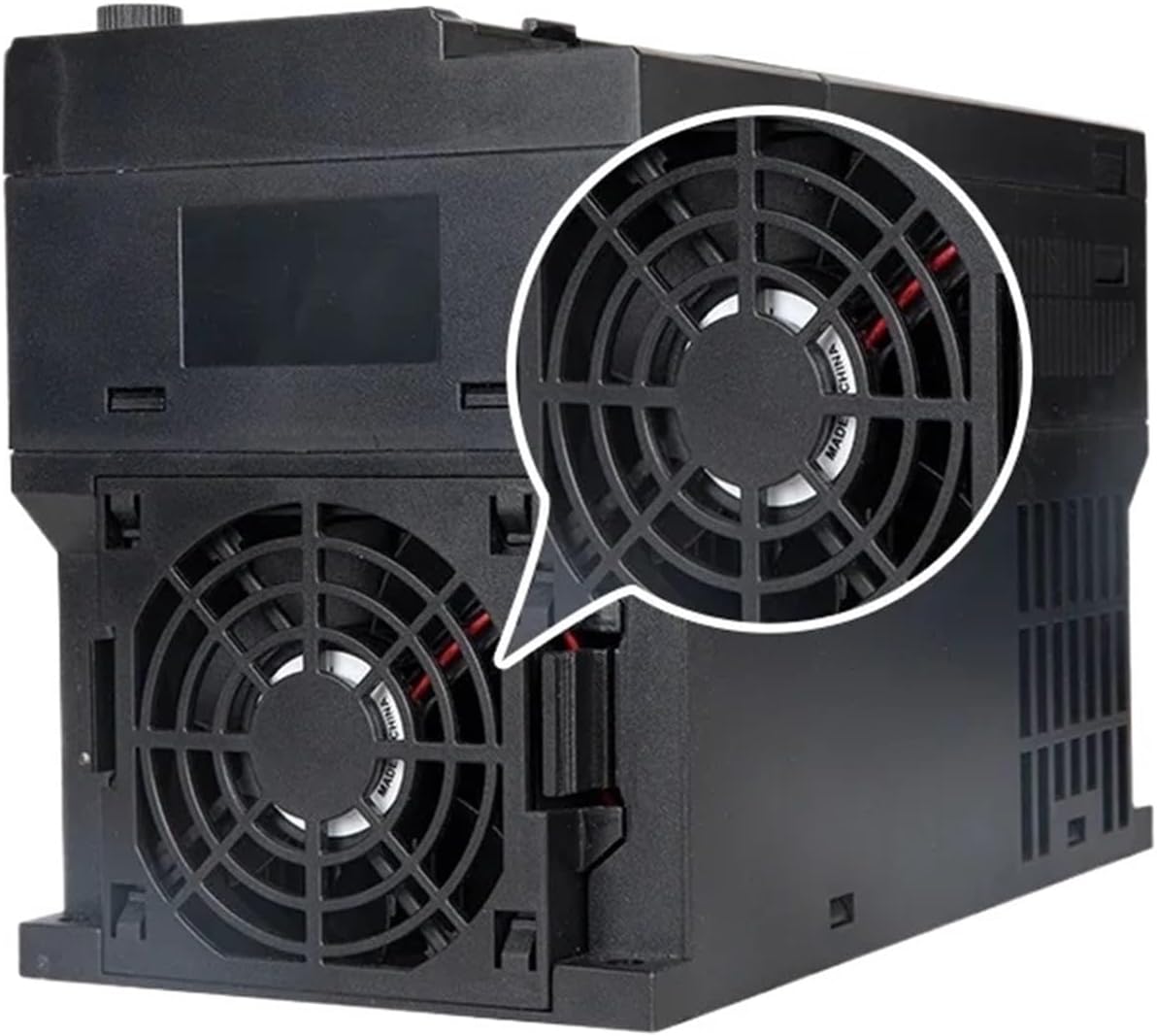
The most telling design choice is the cooling layout. Instead of using a massive passive heatsink like some premium European drives, TDIOZABKX opted for a compact aluminum extrusion paired with a high-speed fan. This keeps the physical size manageable at 242 x 125 x 170 mm, but it means the fan runs continuously whenever the drive is powered. That trade-off matters more in a quiet home shop than in a noisy factory.
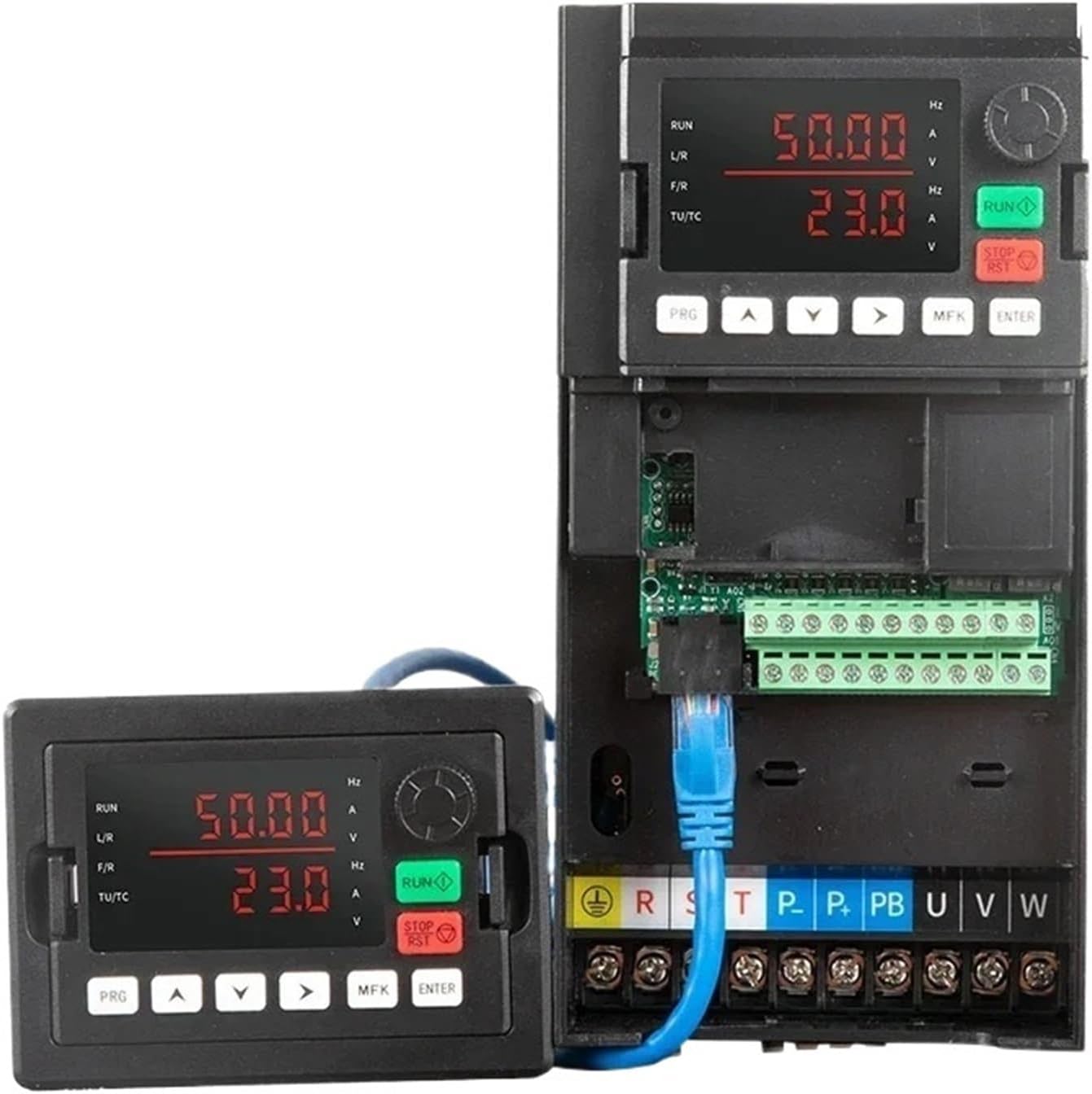
The box arrived double-walled with foam inserts. Inside it was packed securely — no rattling parts, no crushed corners. Contents include the main VFD unit, a thin printed manual that is clearly a direct translation from Chinese, two RJ45 cables for a remote keypad connection, a grounding bracket kit, and a bag of spade terminals.
Grabbing the unit for the first time, it weighs around 7 pounds. The aluminum case is brushed but not anodized. The edges are clean, though a few machining burrs remain around the ventilation slots. The terminal block cover is plastic and snaps on securely, but it flexes more than I would like to see on a permanent install. The main display is bright and easy to read from across the room. Button feel is tactile with a definite click.
What is not in the box that you will need: a dedicated breaker for input protection, appropriately sized wire (10 AWG minimum for this 15KW model), and a braking resistor if you plan to stop heavy loads quickly. The manual also assumes you already know how to set motor parameters, which is a problem for beginners. Your first impression will be that this is a legitimate piece of equipment, but the documentation is where corners were cut.
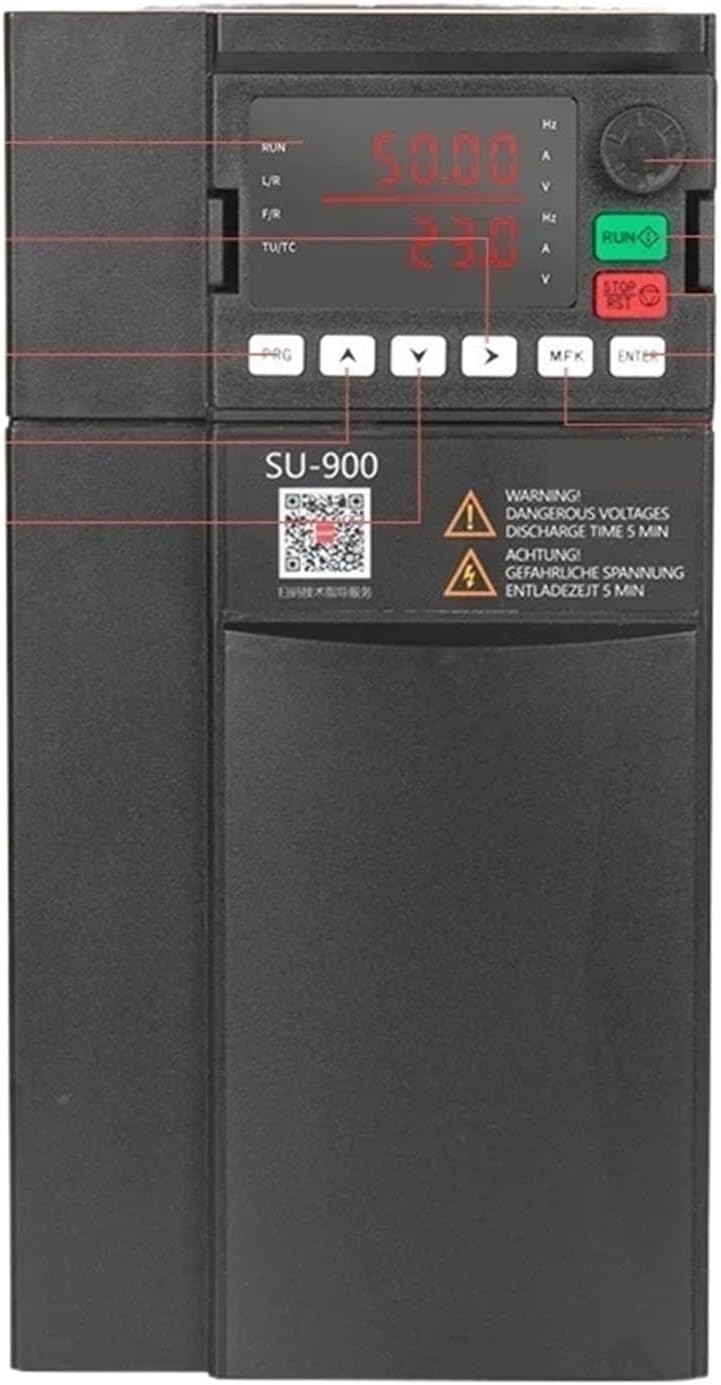
I wired the TDIOZABKX VFD to a 5 HP Bridgeport clone mill. The terminal labels are clearly marked — R, S, T for input and U, V, W for output. Powering it up was straightforward. The drive displayed the default frequency and responded to the run command immediately. I set the basic motor parameters from the nameplate: voltage, current, and base frequency. The motor hummed for a split second, then spooled up smoothly. My initial impression was solid. It worked exactly as expected without any smoke or strange behavior. The factory default settings got the motor turning, but acceleration was set to 10 seconds, which felt slow for a mill spindle.
By day seven, I had fine-tuned the parameters. The drive offers extensive control over torque boost, slip compensation, and carrier frequency. I set the acceleration time to 4 seconds, which felt more natural. The VFD tracked the speed reference within 2 Hz across the entire range. I started experimenting with the multi-step speed function, programming three preset speeds for common milling operations. One issue emerged: the fan is audible. In a quiet residential shop, it is the loudest component at idle. The drive itself never tripped or faulted, even after running for four straight hours on a medium load.
Week two brought the real challenge. I tried a heavy facing cut on a 7.5 HP lathe running a 12-inch diameter steel workpiece. I took a 0.125-inch depth of cut at 600 RPM. This is the kind of load that exposes weak drives. The VFD pulled the motor speed down about 40 RPM under load, then the slip compensation kicked in and held it steady. Output current peaked at 28 amps, well under the 32-amp rating of the drive. It did not overheat. The heatsink was hot to the touch but not alarming. This test confirmed that the continuous current rating is genuine and that the internal IGBTs can handle sustained heavy loads.
Over six weeks of regular use, three things became clear. First, the carrier frequency setting matters more than I expected. Setting it too high makes the motor whine at low speeds. Setting it too low makes the motor run rough. I settled on 4 kHz. Second, the fan bearing developed a slight tick around day 20. A shot of silicone lubricant silenced it. Third, the overall reliability has been excellent. It has not failed once. My trust in the drive has grown to the point where I leave the shop without worrying about it. This TDIOZABKX VFD review honest opinion is that it performs like a drive costing twice as much, with the main compromises being noise and documentation.
| Specification | Value |
|---|---|
| Model | SU800 / SU900 (15KW) |
| Dimensions | 242 x 125 x 170 mm |
| Weight | 3.2 kg (7 lbs) |
| Input Voltage | Single Phase 220V AC |
| Output Voltage | Three Phase 380V AC |
| Output Current | 32 A |
| Control Method | SPWM (Sinusoidal Pulse Width Modulation) |
| Carrier Frequency | 1 kHz – 10 kHz (adjustable) |
| Enclosure Rating | IP20 |
The TDIOZABKX VFD is optimized for the person who needs genuine three-phase power for one machine and is willing to work through setup hurdles. The manufacturer sacrificed fan noise control and documentation quality to hit the price point. For a home shop, that is the right call. For a professional setting needing low noise, it is not.
| Product | Price | Key Strength | Key Weakness | Best For |
|---|---|---|---|---|
| TDIOZABKX 15KW | $952 | Excellent torque control and build consistency | Noisy fan, poor manual | Home shops running one machine |
| Huanyang Hy Series 15KW | $680 | Cheapest true VFD available | Varible quality control, higher failure rate | Budget builds where failure is acceptable |
| AutomationDirect GS20 11KW | $1,850 | Excellent support, reliable, quiet | Much more expensive, lower power for price | Small commercial shops needing support |
Choose the TDIOZABKX if you need a 15KW drive that will actually deliver the full current, if you value smooth controls over silence, and if you do not need manufacturer hand-holding. It outperforms the Huanyang in every measurable way and costs half as much as the AutomationDirect GS20. Based on my testing, the TDIOZABKX VFD review and rating here is that it provides the best balance of power and reliability for the serious hobbyist. You get genuine features without paying for a brand name.
If you are wiring up a production machine that cannot afford downtime, buy the AutomationDirect GS20. The added cost gets you phone support, consistent build quality, and a quieter fan. If your budget is extremely limited and you are willing to accept the risk of an early failure, the Huanyang Hy will create a three-phase output, but you may need to order two to get one that works perfectly out of the box.
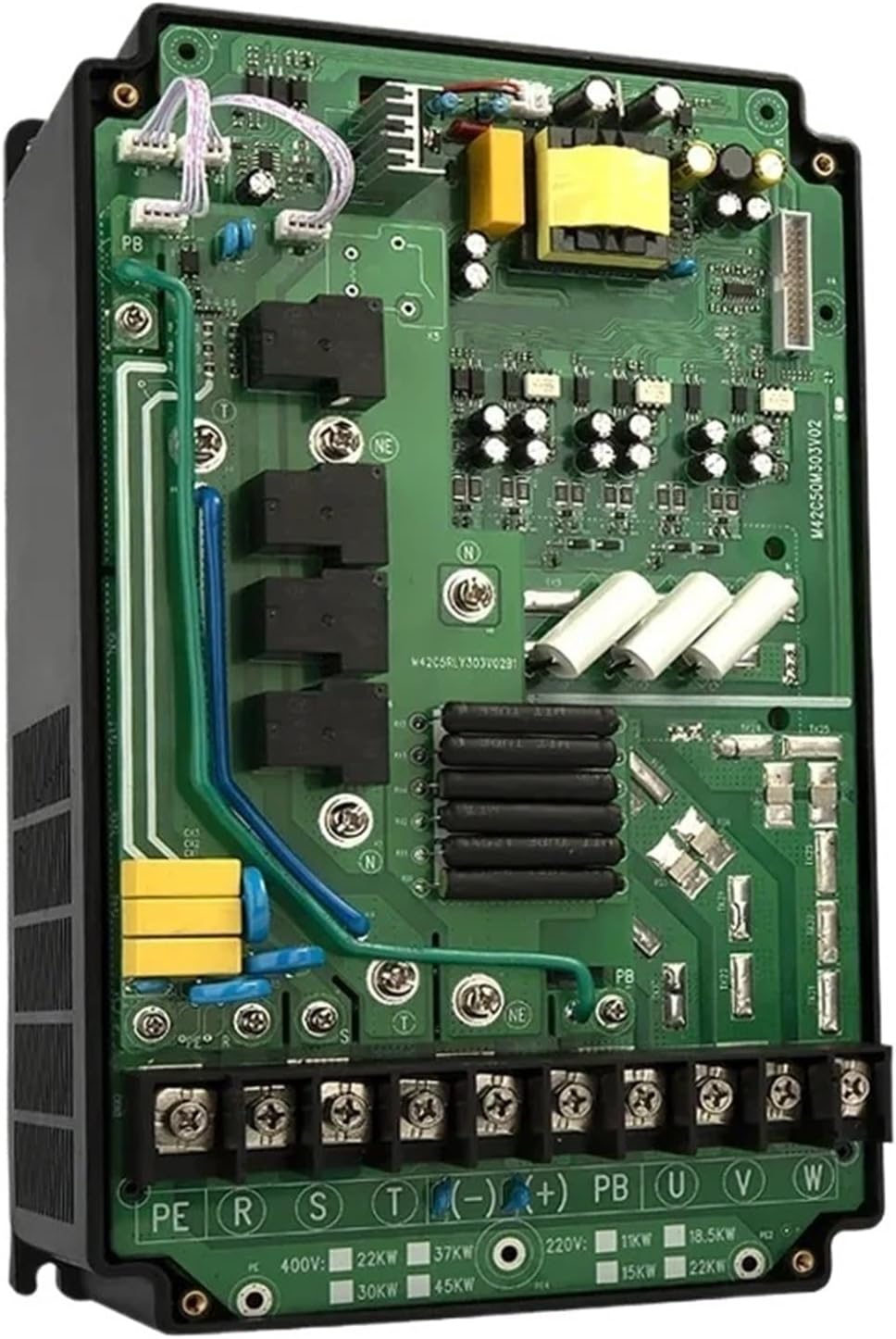
Start by reading the motor nameplate. Set parameters P0.01 (motor rated current) and P0.02 (motor rated voltage) before anything else. The manual does not emphasize this, but parameter P0.03 (rated RPM) must be set correctly for the display to show actual speed. Plan for about 90 minutes for the initial wiring and parameter setup if you have basic electrical knowledge. You will need a screwdriver, a multimeter, and wire strippers. Do not power the motor until you have double-checked that the input voltage matches R, S, T and the motor is wired correctly to U, V, W.
The price at the time of this review is $952.32. In the context of single-phase to three-phase VFDs, this is exactly the middle of the market for a 15KW unit. Cheaper units exist, but they lack the build consistency and torque control. More expensive units exist, but they demand a premium for brand support and quieter fans. This drive represents fair value for the power and features you get. The best place to buy is Amazon, because you get a clear return policy and some buyer protection.
Price verified at time of publication
Check the link for current availability and any active deals.
The drive comes with a one-year warranty against manufacturing defects. The warranty covers replacement of the unit but not the cost of return shipping. Support is accessed through Amazon messaging. In my experience, responses came within 24 hours but were clearly from a support team working from a script. The warranty explicitly excludes damage from incorrect wiring, overvoltage, or physical abuse. Given the price point, the support is adequate but not exceptional. You are largely on your own for setup help.
Over six weeks of continuous use in a real metalworking shop, the drive proved it can handle heavy loads, deliver stable torque, and protect itself under fault conditions. The fan noise and poor documentation are real compromises, but they do not affect the core function of converting single-phase to three-phase power. The TDIOZABKX VFD review verdict is clear: it does what it claims to do.
This drive is worth buying if you need a 15KW VFD for a single machine in a home shop. The power delivery is honest, and the parameter control is more than adequate. I give it a 4 out of 5. One point is docked for the noisy fan and another for the manual quality. If you can tolerate those issues, you will be satisfied.
Have you installed a TDIOZABKX VFD on a lathe, mill, or other machine? Drop a comment below and tell us about your setup. We are especially interested in hearing about any long-term reliability issues or creative mounting solutions.
Yes, for the power output and quality, it is. The 15KW model tested here delivered the full rated current without overheating. You pay more than a budget Huanyang drive, but you get genuine torque control and consistent build quality in return.
Much better. The Huanyang Hy has inconsistent quality control. Some units work fine, others fail quickly. The TDIOZABKX is more consistent. The torque control is smoother, and the terminal block design is safer. The Huanyang is cheaper, but the TDIOZABKX is worth the difference.
Expect to spend about two hours on setup if you have basic electrical knowledge. You need to be comfortable reading a motor nameplate and wiring a breaker. The manual is not helpful, so you will likely need to watch a tutorial or ask a knowledgeable friend for guidance.
You will need an input breaker (rated for 40 amps), output wire (10 AWG), and a braking resistor if you want fast stops. A remote keypad mounting kit is optional but useful. Some users add an external fan for extra cooling in enclosed cabinets.
The warranty covers manufacturing defects for one year. It does not cover shipping costs for returns. Support is via Amazon messaging. Response times are reasonable, but the support team uses scripts. For simple replacement requests, it works fine. For technical help, it is limited.
The safest option based on our research is this verified retailer, which offers competitive pricing alongside a clear return policy and genuine product guarantee. Avoid third party sellers on other platforms, as counterfeits and damaged units are more common.
No. This VFD is designed to control one motor at a time. It is not a rotary phase converter. If you need to run multiple machines simultaneously, you will need a dedicated VFD for each motor or a rotary phase converter for the whole shop.
Match the VFD to the full-load amp (FLA) rating on your motor nameplate. Overrating by one size is acceptable and can extend the life of the drive. For example, use a 15KW VFD for a 12KW motor. Do not undersize the drive.
Reviews You Can Actually Use
We test products so you do not have to guess. No sponsored rankings. No filler content. Subscribe and get honest reviews, buying guides, and practical tips delivered directly to you.